
By Tim Llewellyn, Flexicon Corp.
Published in Powder & Bulk Solids, April 2026 — Technical Exclusive
The transition from manual or gravity-based material handling to a powered conveying system is typically driven by factors such as increased production rates, frequent starvation of processing equipment, excessive dust generation, or concerns related to labor efficiency and ergonomics. The many different design concepts of mechanical conveying systems, combined with their ability to handle a broad spectrum of bulk materials, make them candidates for many processing applications.
With a wide array of mechanical conveying technologies available, the first step is determining which conveyor type best fits the application. An initial assessment can typically be conducted internally, based on key factors related to material properties, plant conditions, and layout requirements.
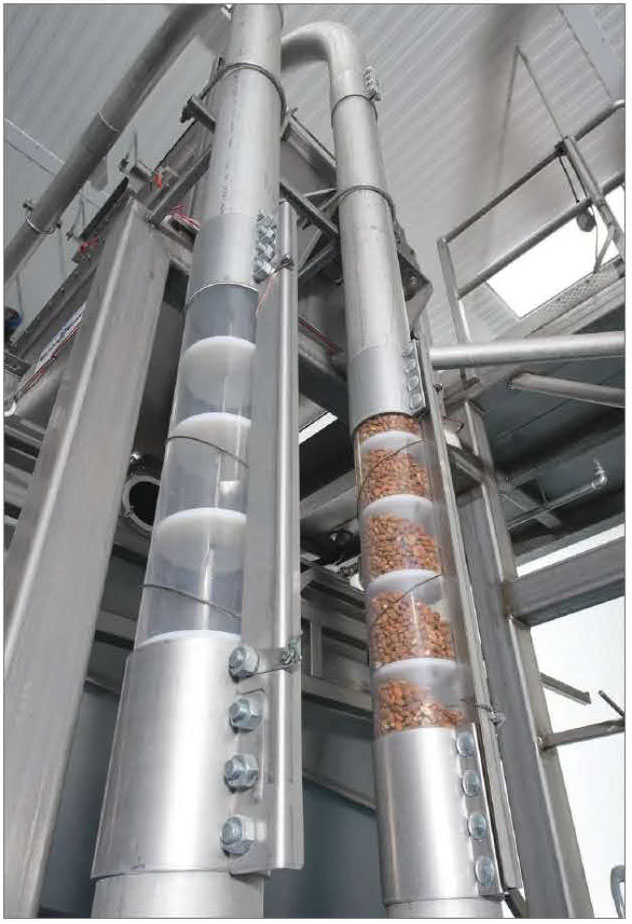
Suitable Equipment Options
The universal components of a mechanical conveying system are a continuously moving conveying element and a drive unit that powers its motion. Some conveying methods that share these characteristics include bucket elevators, belt conveyors, tubular chain and tubular cable conveyors, solid flight screw conveyors, and flexible screw conveyors. Each method offers distinct advantages depending upon the application, so it is important to pair the mechanical conveyor type with process parameters that match the conveyor’s strengths.
While there can be many factors for selecting a mechanical conveyor, some basic considerations are outlined below.
Bucket Elevators & Belt Conveyors
Bucket elevators and belt conveyors are both well suited for handling fragile materials but have distinct differences when considering desired plant layout. Bucket elevators can convey material vertically while gently carrying material to its destination. Although belt conveyors have limitations to the angle at which they can incline, they can be routed over long distances, making them ideal for transporting bulk materials across extended plant layouts or between processing areas.
However, it is important to note that bucket conveyors have many moving parts that require frequent maintenance. Further, both options have open designs that typically rule out conveying contamination-sensitive materials and dusty powders. Although they may be enclosed, dust can accumulate on conveyor components, complicating maintenance and cleaning in these types of applications.
Given the limitations of more open-design conveyors for sensitive or dust-prone materials, the selection process naturally shifts toward enclosed systems. Tubular cable conveyors, tubular chain conveyors, flexible screw conveyors, and solid flight screw conveyors with their fully enclosed designs, offer more controlled material handling and reduced dust emission, making them the logical next options to evaluate.
Tubular Chain & Cable Conveyors
Tubular chain and tubular cable conveyors are sealed mechanical conveying systems, moving bulk materials through an enclosed tube using a series of evenly spaced discs. Both systems use a continuous loop of cable or chain driven by a powered wheel at one end of the circuit and put under tension by a wheel at the opposite end. Like bucket elevators and belt conveyors, these designs are also well suited for handling fragile materials due to their low conveying speed and gentle handling.
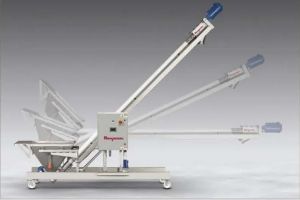
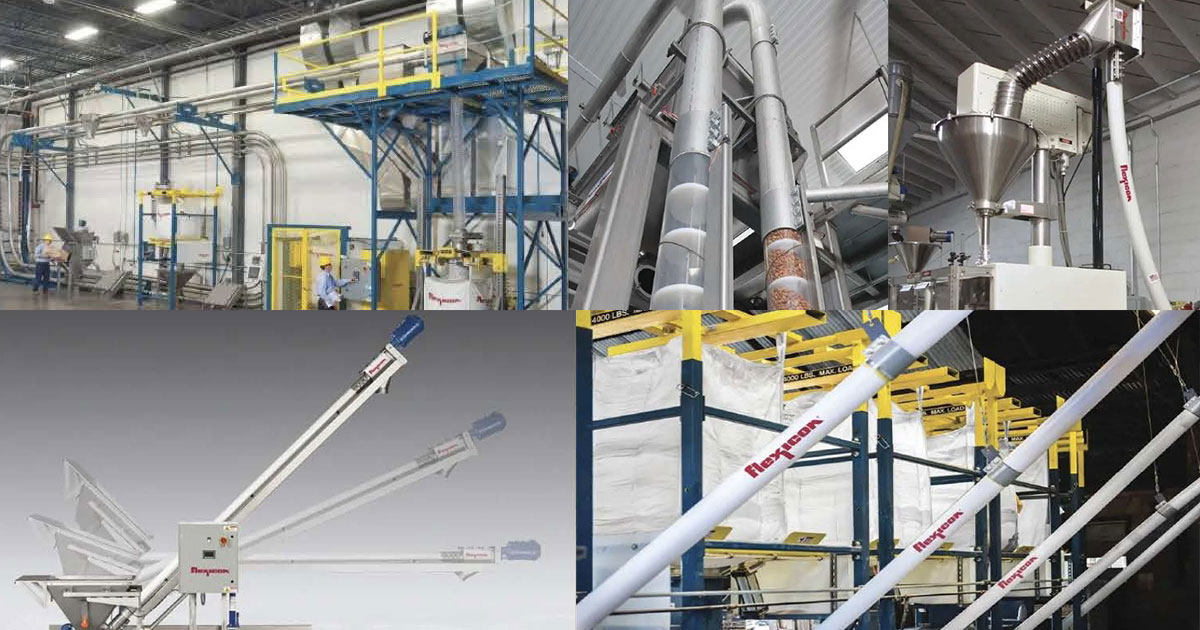
This tilt-down flexible screw conveyor on a caster-mounted frame rolls to washdown areas, positioning the tube horizontally so the screw can be easily removed for a thorough cleaning.
Because the conveying path is fully enclosed, both designs offer excellent dust control and protection from contamination, and both can convey material horizontally, vertically, or around corners. While the two technologies share a similar operating principle, there are important differences in construction, performance, and the ideal application.
A chain conveyor is more suitable than a cable conveyor for applications demanding a higher capacity, durability, and resistance to wear, especially with dense or abrasive materials. Conversely, when gentle handling, lower power consumption, quieter operation, and complex routing are priorities, a tubular cable conveyor is often the preferred solution. Its flexible cable and disc design allows for smooth product flow with minimal degradation, making it ideal for friable, fragile, or shape-sensitive materials.
The cable on a cable conveyor can be coated with polymer, making it a better option for food or other clean processes. Of the two options, cable conveyors are generally easier to keep clean. The chain conveyor can be used for sanitary applications, but the chain presents more surfaces where product can cling.
Solid Flight & Flexible Screw Conveyors
Solid flight screw conveyors and flexible screw conveyors frequently get associated together because both use a rotating screw enclosed in a housing. In practice, however, they are constructed very differently and solve different material handling challenges. Of all conveying technologies discussed in this article, these two designs require the least amount of maintenance. However, both types of screw conveyors have limitations when it comes to moving fragile materials without breakage.
Solid flight screw conveyors are common in heavy-duty, high-capacity applications such as cement making or mineral extraction. Their robust spirals can perform continuous handling of heavy or abrasive materials such as grain, sand, cement, or minerals efficiently and reliably. The layout restrictions with this design of conveyor are that incline angles can be limited and that this conveyor cannot curve through its routing.
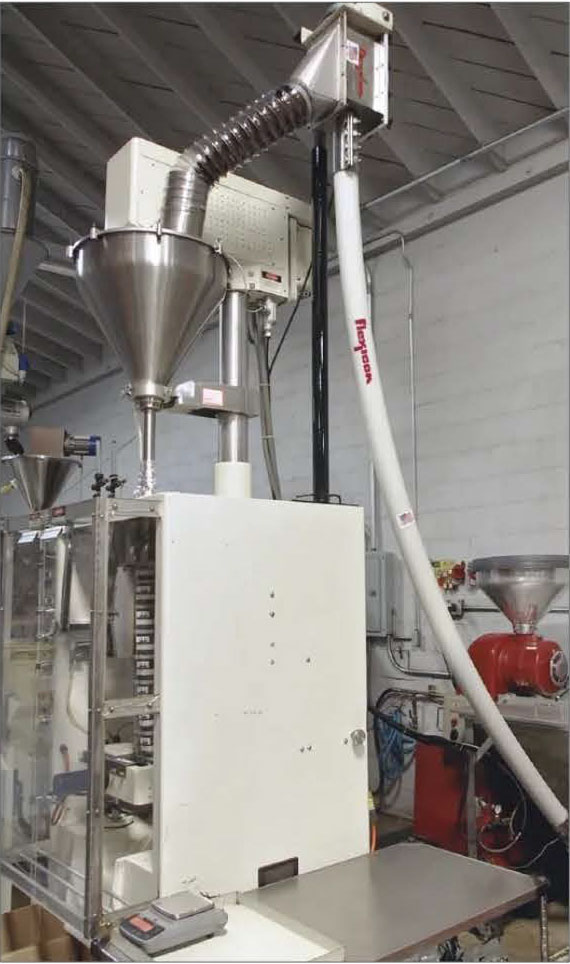
As the name implies, the spiral on a flexible screw conveyor is significantly more pliable than a traditional solid flight conveyor and can be installed in a curved routing. Additionally, this design is well suited for vertical transport with many of these conveyors bending straight up as they travel toward the discharge point. Another primary difference between these two screw conveyor designs is the fact that a flexible screw conveyor does not have any bearings in the product contact zone. This provides a benefit from a maintenance standpoint when compared to solid flight screw conveyors. Popular for food and chemical applications, the simple design makes them easier to clean once the conveyor spiral is removed from the system.
Seek Expert Advice
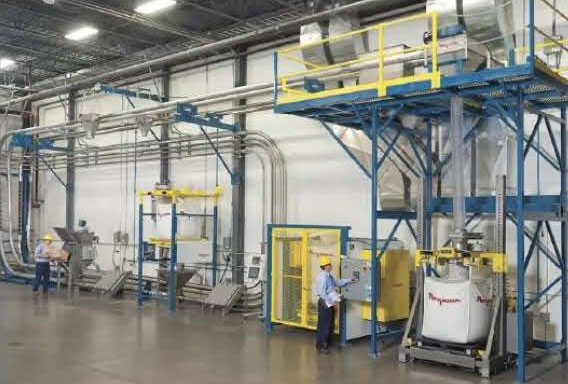
Even after an initial internal review has narrowed the field of suitable conveying technologies, processors are strongly encouraged to involve a bulk material handling systems expert. Choosing between closely related technologies — such as tubular cable and tubular chain conveyors — often hinges on nuanced application details that are difficult to fully evaluate without specialized experience.
Applications engineers can move beyond general assumptions and conduct a data-driven evaluation of material behavior using quantitative flow indicators such as the Hausner Ratio (a predictor of powder flowability). When analyzed alongside particle size, angle of repose, bulk density, moisture content, abrasiveness, sensitivity to shear, attrition, or segregation, they provide the empirical foundation needed to select the optimal conveying technology.
Engaging a conveying expert at this stage ensures that the selected technology is not merely acceptable on paper, but optimized for consistent, reliable operation over the life of the system. Proper application engineering reduces premature wear, minimizes maintenance and downtime, supports regulatory and sanitation compliance, and lowers total cost of ownership, while protecting product quality and process uptime.
Test in Real-World Conditions
A viable equipment supplier should maintain an in-house testing facility and, ideally, have extensive experience conveying the material in question using multiple conveying technologies. Physical testing under representative conditions remains one of the most effective ways to confirm material compatibility, validate performance assumptions, and make a confident, data-driven technology selection.
Throughput requirements can be validated under real-world operating conditions, accounting for run times, start/stop frequency, conveyor routing, elevation changes, and layout constraints. Just as importantly, experienced engineers can design in flexibility for future capacity expansion, helping ensure that today’s conveyor selection does not become tomorrow’s bottleneck.
Adapt the Equipment to the Process
Selecting the right mechanical conveying system is not merely an equipment purchase; it is a strategic decision that requires an evidence-based selection process. Prospective owners must evaluate all viable conveying options, carefully analyze the physical characteristics of the materials being handled, and consider how those characteristics interact with the intended routing and throughput requirements. Meaningful discussions with experienced conveying specialists, combined with material testing when appropriate, further validate assumptions and reveal potential challenges before installation. This methodical approach ensures that the final system is engineered around the material and the process, rather than forcing the process to adapt to the equipment.
Tim Llewellyn is the global director of sales at Flexicon Corp. (Bethlehem, PA), a designer and manufacturer of bulk handling equipment and custom-engineered systems. He has more than 20 years of experience managing and delivering complex global projects within the bulk material handling industry. Llewellyn has expertise in multiple sectors, including food, chemical, pharmaceutical, nutraceutical, and plastics. For more information, call 888-353-9426 or visit www.flexicon.com.